
Is Made-to-Measure Rebar Greener? Weighing Precision-Bent Steel Against Standard Lengths
Reinforcing steel plays an important role in concrete construction, but its environmental impact extends beyond the finished structure. Cutting, bending, transporting, and installing steel all affect how efficiently a project uses materials. For builders seeking to reduce construction waste, choosing between factory-prepared reinforcement and standard steel lengths deserves careful consideration.
Made-to-measure reinforcement offers one possible solution. Suppliers can produce custom reinforcing steel shapes based on structural drawings, allowing contractors to receive bars and fittings prepared for specific applications. This approach may reduce cutting waste and on-site adjustments. However, its environmental value depends on transport distances, order quantities, design accuracy, and how efficiently the steel is manufactured.
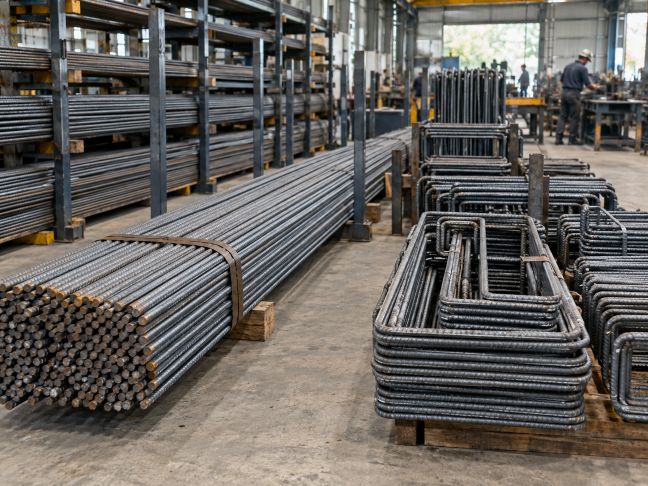
Why Precision-Bent Steel Could Reduce Construction Waste
The main environmental argument for prefabricated reinforcement is straightforward. When steel arrives cut and bent to the required dimensions, construction teams have fewer adjustments to make. This can reduce offcuts, unnecessary handling, and the risk of preparing incorrect components.
The World Steel Association identifies material efficiency as an important part of reducing steel’s environmental impact. Using the right amount of material and limiting waste can reduce demand for additional steel production.
Factory preparation can support this goal when cutting schedules are carefully planned. Suppliers may combine orders or arrange cutting patterns that make better use of available stock. However, these benefits depend on production practices rather than the custom dimensions alone.
There is also a practical advantage for construction teams. Prepared reinforcement can simplify installation and reduce the need for repeated measuring, cutting, and bending on-site. Fewer adjustments may help contractors manage labour and material resources more efficiently.
Less Waste on Site Does Not Always Mean Less Waste Overall
The environmental calculation becomes more complicated when the entire supply chain is considered. A project might generate fewer steel offcuts on-site while creating additional waste during factory preparation or transportation.
The International Organization for Standardization establishes life cycle assessment principles through ISO 14040. These principles encourage evaluating environmental impacts across different stages of a product’s life rather than focusing on a single activity.
Applied to reinforcement, this means considering manufacturing, processing, delivery, installation, and eventual recovery. A reduction in visible construction waste does not automatically establish a lower overall environmental footprint.
When Transport and Order Sizes Change the Equation
Transport is one area where standard lengths may have an advantage. Steel supplied through established distribution networks can sometimes be delivered alongside other construction materials. Specialised reinforcement may require separate deliveries from a more distant processing facility.
The International Energy Agency identifies transport as a significant source of energy-related emissions. Additional vehicle journeys can therefore influence the environmental outcome of material procurement.
Minimum order quantities create another concern. If a supplier requires contractors to purchase more prepared reinforcement than a project needs, unused components may offset the savings achieved through precise cutting.
Standard lengths offer flexibility for smaller projects and changing site requirements. Contractors can cut available stock for several applications, provided they maintain suitable cutting plans and manage offcuts responsibly.
What Happens When Structural Drawings Change?
Design accuracy is essential to the environmental performance of made-to-measure reinforcement. Once bars have been cut and bent, significant changes to dimensions or structural details may leave some components unsuitable for their intended locations.
The Waste and Resources Action Programme, known as WRAP, has promoted resource efficiency and waste prevention within construction. Its broader approach highlights the importance of planning material requirements before unnecessary waste occurs.
For reinforcement procurement, this means checking drawings, confirming measurements, and coordinating with structural engineers before production begins.
Projects with stable designs and repeated reinforcement details may benefit from factory preparation. Conversely, developments facing frequent revisions may need greater flexibility in their material supply.
Why Standard Lengths Still Have a Place
Conventional reinforcement should not automatically be viewed as the less sustainable option. Its environmental performance depends heavily on how contractors order, cut, store, and reuse their materials.
The British Constructional Steelwork Association explains that steel can be recycled repeatedly, making recovery an important consideration when evaluating its environmental performance.
Although recycling does not eliminate the impacts of initial production, effective scrap collection can prevent usable material from being discarded.
On projects with varied reinforcement requirements, thoughtful cutting schedules and careful stock management may allow standard lengths to deliver acceptable material efficiency without specialised manufacturing or additional deliveries.
Which Approach Makes More Environmental Sense?
Neither option has a universal environmental advantage. Made-to-measure reinforcement becomes attractive when accurate drawings, efficient factory cutting, suitable order quantities, and coordinated deliveries work together to reduce material waste. However, reinforcement is only one part of a building’s overall environmental performance. Other green building solutions
, such as insulation systems, also require careful consideration of material efficiency, energy performance, and long-term environmental impact.
Standard lengths remain practical when project requirements change frequently, local supply is readily available, or contractors can efficiently use remaining stock across different tasks.
The broader lesson is that sustainability depends on the complete procurement and construction process. As builders seek better environmental outcomes, comparing actual material use, delivery requirements, and waste management practices will provide a more reliable basis for choosing reinforcement than relying on product type alone.